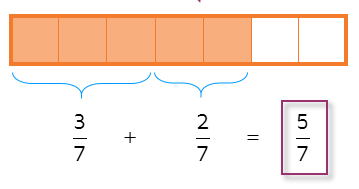
Add Fractions To Common Denominators. Adding fractions with unlike denominators means we need to add fractions that have different denominators. If necessary we can simplify the fraction to lowest terms or a mixed number.
How To Add Fractions With The Same Denominator - Kate's Math Lessons from www.katesmathlessons.com
Add or subtract fractions with different denominators. Example 4.53 find the sum: In this case, 4 and 5 have no common factors.
In The Example Of Pizza, This Means Each Slice Has To Be The Same Size.
Check the denominators of the fractions. We can simply multiply the denominators to get a common denominator. If we are working with pizza slices that have been cut into different sizes, we need to find a way to cut all of them into slices that are the same size.
If There Is No Common Factor To Both The Denominators Then You Multiply Both The Denominators To Get The Common Denominator.
Once the match is found, students will write the number representing the problem below its match on the safe.when students ad All whole numbers are fractions with a denominator equals 1; When fractions have the same denominators, we can say that these fractions have common denominators.
Adding Fractions With Unlike Denominators Means We Need To Add Fractions That Have Different Denominators.
Once we have converted two fractions to equivalent forms with common denominators, we can add or subtract them by adding or subtracting the numerators. 3 5 + 1 5. When the denominators are unlike or different.
He Says That It Is Similar To Adding Two Fractions With Common Denominator.
Example 4.53 find the sum: A fun and engaging way to add and subtract fractions with common denominators. If the denominators are not the same, you must find the common denominator by finding the.
One Way To Express Fractions With The Same Denominators Is To Multiply Both The Numerator And The Denominator By The Other Fraction's.
The first step is to find the lowest or least common multiple of our denominators, which in this example are 6 and 9. 3 7 + 1 14 = (the common denominator is. Rewrite the fractions so they share the same denominator.